June 5, 2026 · A bi-weekly letter
What do
you want?
One question · Two perspectives · One experiment · +1
|
|
00
|
Before you read · one quick question
When you picture the future you want, what feeling are you really reaching for?
|
Tap to reply · I read every one.
|
◆ One question
What feeling are you hoping your future will give you?
|
Dear future-ready friend, Last weekend I was at Esalen, on the cliffs above the Pacific, not as a speaker, not as a facilitator. Just as a participant, just curious. One exercise stopped me. We were asked to write a list. Ten, twenty, thirty things we genuinely want right now. No filter, no editing for reasonableness. A better relationship. Deeper connection. Feeling truly loved. But also: a car, a bicycle, a necklace. Anything. |
One woman in the circle shared her list out loud. Relationship. More time with her kids. Feeling truly free. And then, with a small smile: oh, and a Cartier bracelet. The room laughed. She laughed. But then she sat with the question: when you have this bracelet, how does it make you feel? She got quiet. Then: seen. Like someone noticed. And I found myself wondering: how often do we do this? |
The bracelet was
never the point.
it was a delivery mechanism for a feeling.
|
We tell ourselves we want the promotion, the relationship, the house, the degree, the successful company, the bestselling book. But if we're honest, those things are often carrying a much deeper request. Somewhere inside the achievement, we imagine, lives a feeling we have been longing for all along. Which opens a different question than the one we usually ask ourselves about the future. |
Not: what do you want?
But: what feeling are you hoping
your future will give you?
|
|
01
|
Perspective one
What we've always known
but keep forgetting.
|
|
|
Psychologists have long observed this. Abraham Maslow mapped the architecture of human needs in the 1940s - belonging, significance, safety, love - and decades of research since have only confirmed it: we reach for the thing because the feeling is harder to name. Buddhism noticed it centuries earlier. The Pali word tanha (often translated as craving) literally means thirst. Not hunger, thirst. The teaching isn't to stop desiring. It's to see clearly what you're actually thirsty for. Because when you know that, you can drink from many springs. Both arrive at the same insight: most desires have two layers. The thing. And the feeling beneath the thing. And if we cannot name the feeling, we often end up taking the longest possible route toward it. |
◆ Screenshot this ↓
Most desires have
two layers. The thing.
And the feeling
beneath the thing.
- what do you want
|
≋ The Future Is HOW · with Brice Challamel
He asks AI for questions,
not answers.
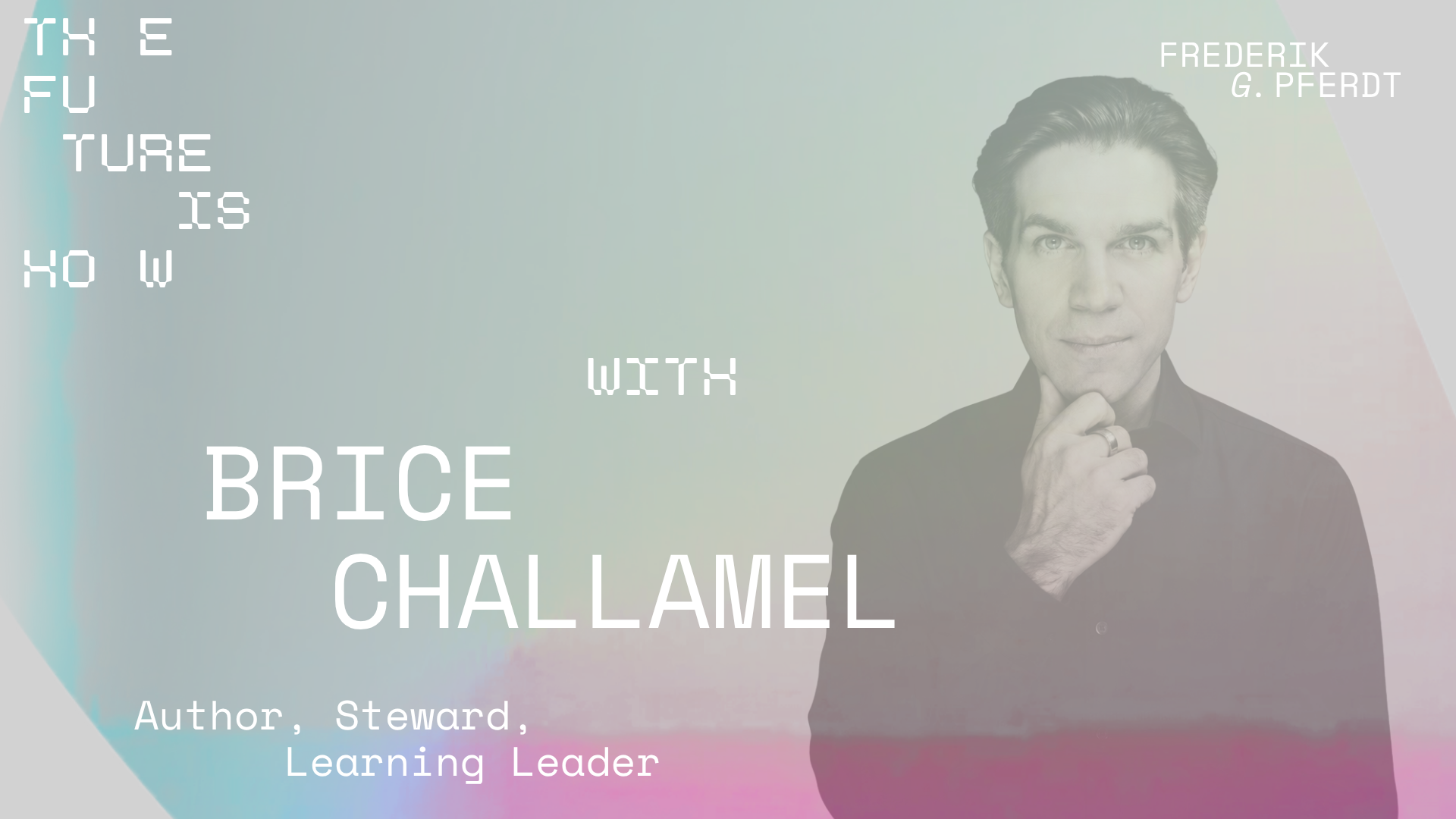
What's left of us when AI can generate the idea, write the memo, and build the prototype faster than we ever could? Brice Challamel, Head of AI Strategy and Adoption at OpenAI, has a surprising answer: we become stewards of our own intent. The same move as today's +1 - he asks AI for questions, not answers - plus why he has actually cried in an AI conversation, and what stays irreplaceably human.
▶ Listen on your way to work
|
|
|
02
|
Perspective two
What children
already know.
|
|
|
Watching my children has convinced me that we begin life understanding this instinctively. When they ask for something, the request often sounds material on the surface. A toy. A special outing. Staying up a little later. Yet what they remember years later is almost never the thing itself. They remember how they felt. They remember being chosen. Being listened to. Being important enough for someone to put everything else aside for a moment. |
They want connection
and call it a toy.
They want belonging
and call it a sleepover.
They want to matter
and call it a birthday party.
|
Children haven't yet learned to disguise their feelings as objects. Somewhere along the way, many of us become less fluent in the language of feelings and more fluent in the language of achievements. We stop saying I want to feel appreciated and start saying I want a bigger role. We stop saying I want to feel free and start saying I want more money. The feeling doesn't disappear. It simply puts on a different costume. The research and the child are saying the same thing: one in data, one in pure instinct. |
◆ One experiment
The feeling
beneath the thing.
We get remarkably clear about what we want to have, achieve, build, or become. Yet we stay surprisingly vague about how we hope to feel when we get there.
Three steps · twenty minutes
Step 1 · the list · 10 min
Open a blank page. Write down everything you want right now. Full permission - nothing is too small, too material, too embarrassing, too large. A feeling of peace. A new jacket. A conversation you've been avoiding. A week with no obligations. Aim for at least fifteen things.
Step 2 · the feeling beneath · 5 min
Go back through your list. Next to each item, write one word: the feeling you imagine having it would give you. Seen. Free. Proud. Loved. Safe. Calm. Don't overthink it. First word that arrives.
Step 3 · the other door · 5 min
Pick one feeling that appears more than once. Ask yourself: how else could I create this feeling, today, without acquiring anything? Write one answer. Then do that one thing before the week is over.
|
The future matters.
Goals matter.
Dreams matter.
But before asking what future you want to create, it may be worth asking a quieter one: what feeling are you hoping to find when you arrive?
If a feeling surfaced for you, reply and tell me. I read every one.
|
Starting with this edition, I want to try something new in the NEXTletter. A +1: one thing I'm learning that surprised me, and that I think could be useful in your future too. |
+1
If something surprises me enough to change how I think or feel, I want to pass it on. A book, a prompt, a recipe, a podcast, a movie. One thing per edition. No sponsorships, no ads. Just something that surprised me, and that I think could be useful in your future too.
This edition · a prompt
Open any AI. Paste this in. Then just answer, one question at a time. Don't plan. Don't perform. "You are my future self, ten years from now. You already know how this chapter ends. But don't tell me. Don't guide me. Don't reflect me back to myself. Just ask me one question at a time, as if you're genuinely curious about who I am right now, and quietly relieved to remember it. After 5 questions, ask me one of these:
Option A: What surprised you about your own answers?
Option B: What were you carrying that you didn't have to?" |
Choose the question that scares you a little more.
Open in ChatGPT ↗
Opens with the prompt ready · works in any AI too
|
From within.
 |
With care and love,
Frederik |
|
P.S. · the grade, continued
Last edition I told you I asked Josefina to grade me as a father. She took it seriously - printed out a whole sheet, kept me waiting. And then, before the final verdict arrived, I asked her for a small favor. She looked at me, smiled, and said: "Oh... your grade, remember?"
I did what I always did with my Stanford students: I gave myself the grade first. An A-. Josefina has not yet confirmed or denied this assessment. The jury is still out. I'll report back. |
|
◆ One more thing
Pass it on.
Think of one person who is chasing something right now.
Send them this and ask them the question:
what feeling are you really reaching for?
That is how this community grows -
one future-ready friend at a time.
|
|