◆ Two practices from Steven’s research I met Steven in Copenhagen, where we were both invited to speak at the President’s Summit. I could not stop asking him about his research. One evening I was lucky enough to sit with him at a table at Noma, a restaurant many call the best in the world. You walk in thinking the evening will be about the food. You walk out knowing it was about the people. There was no agenda and nobody watched the clock. It was one of the best “meetings” I have had in a long time. 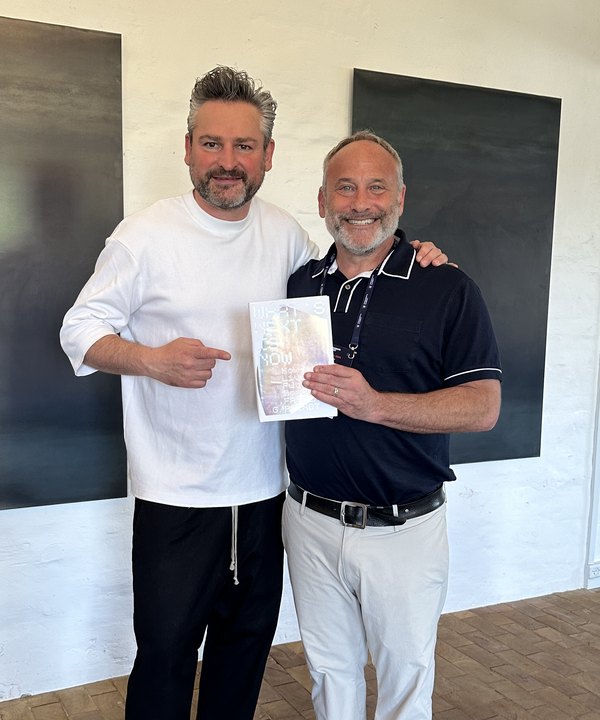 Steven Rogelberg and me in Copenhagen At Google we once experimented with a small barometer that showed who was talking in a meeting, and for how long. Everyone in the room could see who had not spoken yet, and who had done most of the talking. Steven’s research explains why we needed it. Talking lights up the same parts of the brain as good food, so we talk a lot. The gift is to give that feeling to someone else. Here are two practices from his research. Both start before the meeting does. Practice 1 Give people their time back Before you send your next invite, ask Steven’s most important question: Do I really need this meeting? His test is simple. Does it need people to interact? If the information only flows one way, write it down and send it. Everyone you did not invite just received an hour as a gift.  Steven Rogelberg Practice 2 Questions in place of topics Write your agenda as questions to answer. The questions tell you who needs to be in the room. They draw people in, because people love answering questions. And when the questions are answered, you are done. As Steven says: “If you just can’t think of any questions, it likely means you don’t need a meeting.” If you cannot think of a single question, you have your answer to practice one.  Steven Rogelberg |