October 23, 2026 · A biweekly letter How do you want to be?The future of parenting · Part one Before you read · one quick question When you were a kid, what did the adults ask you about your future? Tap to reply · I read every one. |
|
Dear friend, A week ago I drove four kids to a birthday party in San Francisco. My daughter Josefina sat next to me in the front. Behind us: three boys, three phones, and an hour of road. I asked what they use their phones for. "Texting friends. Calling mom." I smiled and told them that in the last 25 minutes I had not seen one text or one call. I had seen reels, and a dare they kept sending around: jump out at a red light, dance in front of the car, earn ten dollars. "Does that ever work?" I asked. They laughed. "Never." So I told them a secret. Do it yourself first. Dance in front of the car, have someone film it, send it, then say: your turn. People rarely follow a dare. They follow someone who went first. When we arrived, I had one more surprise in the trunk: a cotton candy machine. Pink sugar clouds for everyone. |
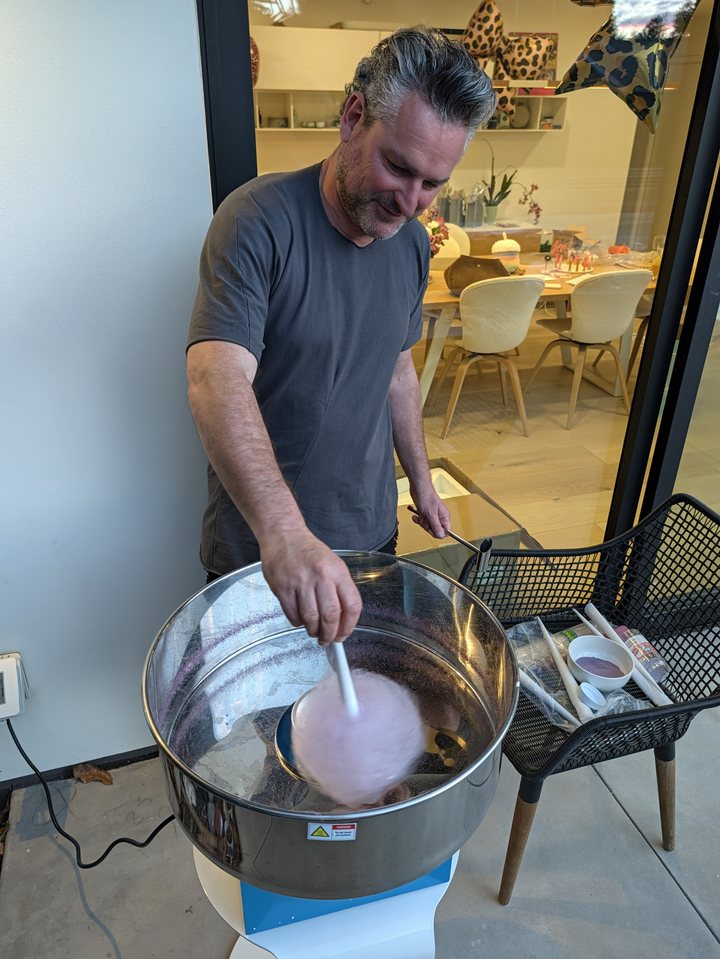 Going first, one pink cloud at a time. |
The next day, the birthday girl's mom wrote to thank me. The boys, she said, were now huge fans of mine. Maybe it was the questions in the car. Maybe it was the cotton candy. I like to think it was a little of both. What stayed with me was something one of them said at the end of the ride: "You should become a teacher." I laughed, because when it comes to my own three kids, I am mostly a student. This letter opens a new series on the future of parenting. If you are not a parent, stay with me. You were once somebody's child, and you are still becoming someone. Everything here is for you too. |
Kids rarely follow a dare.
They follow the one who went first. |
◆ One question How do you want to be?
And what can you do today to become it? |
|
01 · Perspective one Three words |
My latest guest on The Future Is HOW was Amy Edmondson, the Harvard professor who gave the world the idea of psychological safety. At Google, I helped leaders bring her research into their teams. So when she named the three words that build trust faster than almost any others, I listened closely. |
She meant them for leaders. I heard them as a father. Here is something we rarely say out loud: in every family, everyone is new. I have never been the father of a 16 year old before. Jonathan has never been 16 before. We are both doing this for the first time, and neither of us knows exactly how. So that is what I tell my kids: I don't know how to be a good parent. Help me figure it out. And I will help you figure out how to be happy, how to feel alive, and how to stay connected. Those three words do for a family what they do for a team. They make it safe for everyone else to not know, too. |
◆ Screenshot this In every family,
everyone is here
for the first time. |
|
02 · Perspective two The room they kept |
My parents never asked me what I wanted to be when I grew up. They gave me something else instead. They kept a room for me in their house, for the time when things might go wrong, so I would always have a place to come back to. I did not need it often. But knowing it was there made me braver everywhere else. Years later, at Google, I helped leaders build psychological safety into their teams. Only then did I realize my parents had practiced it with me long before I had a word for it. A room you can always come back to is permission to try, to fail, and to try again. I think about that room a lot now. Dr. Shefali, who opened this season of the podcast and with whom I spent long conversations on the deck of a ship, believes the work of parenting begins with the parent. We are here to grow alongside our children, more than to shape them. And my NYU colleague Scott Galloway, whom I got to know backstage at SXSW, argues that the unplanned hours shape a relationship more than any quality time we schedule. The drives. The dishes. The cotton candy. So I do not ask my kids what they want to be. I ask them how they want to be. And when I look closely, each of them is already answering. |
Jonathan, 16, is courageous. He flies down mountains on his bike, and lately he has his hands inside car engines, figuring out how they work and how to fix them. Every morning at 6 a.m., he heads to the gym with his friends. Joshua, 12, is resourceful and full of taste. He goes fishing, cleans what he catches, and cooks it beautifully. He has an eye for style, too, and hunts for vintage clothes that tell a story. Josefina, 11, is confident and expressive. She dances from morning to night, and she moves through the world like the music is already playing. If you would like to meet them, I share moments like these on Instagram: Jonathan flying down the mountain, Joshua with his catch, and Josefina and me in New York. My friend Robert Waldinger, who leads the Harvard Study of Adult Development and joined me on the podcast, has followed lives across more than eight decades. His conclusion is simple: good relationships keep us happier and healthier. Add moving our bodies, and you have two of the strongest things we know for a long life. When I look at my three, I see both already: a gym at dawn with friends, a fishing trip, a dance that fills the whole house. |
| The jobs they will have may not exist yet. Courage, taste, and confidence will travel with them into any future. |
|
◆ One experiment The How Ride Three steps · three minutes Step 1 · Start with I don't know. Next time you are in the car, at the sink, or on a walk together, say it out loud: I don't know exactly how to do this. Will you help me? Step 2 · Ask the better question. Everyone picks one word for how they want to be this week. Curious. Kind. Brave. Playful. You go first. Then say it as who you are: "I am someone who is brave." Researchers found that even preschoolers help more when they are invited to be helpers, rather than simply to help. Words about who we are move us further than words about what we do. Step 3 · Prove it tomorrow. Each person names one small thing they will do tomorrow that shows their word. Next ride, report back. |
|
≈ The Future Is HOW · Season 4 Amy Edmondson on the three words that build trust, at work and at home. |
|
Think of one parent doing their best in a world that moves faster than any of us. Forward this letter and add one line of your own: You are a good one. |
I still do not know how to be a good parent. But I know where to start: ask more than I tell, keep a room open, and go first. Sometimes with cotton candy. |
From within.  | With care and love,
Frederik |
|
P.S. This Sunday in Berlin, I will ask 200 young people the same question at und jetzt…?, free for anyone 18 to 24. If someone you love keeps asking "and now what?", send them this. Details → And if you are looking for where to start with your own future, the 30 doors are still open. Find your door → |
|
