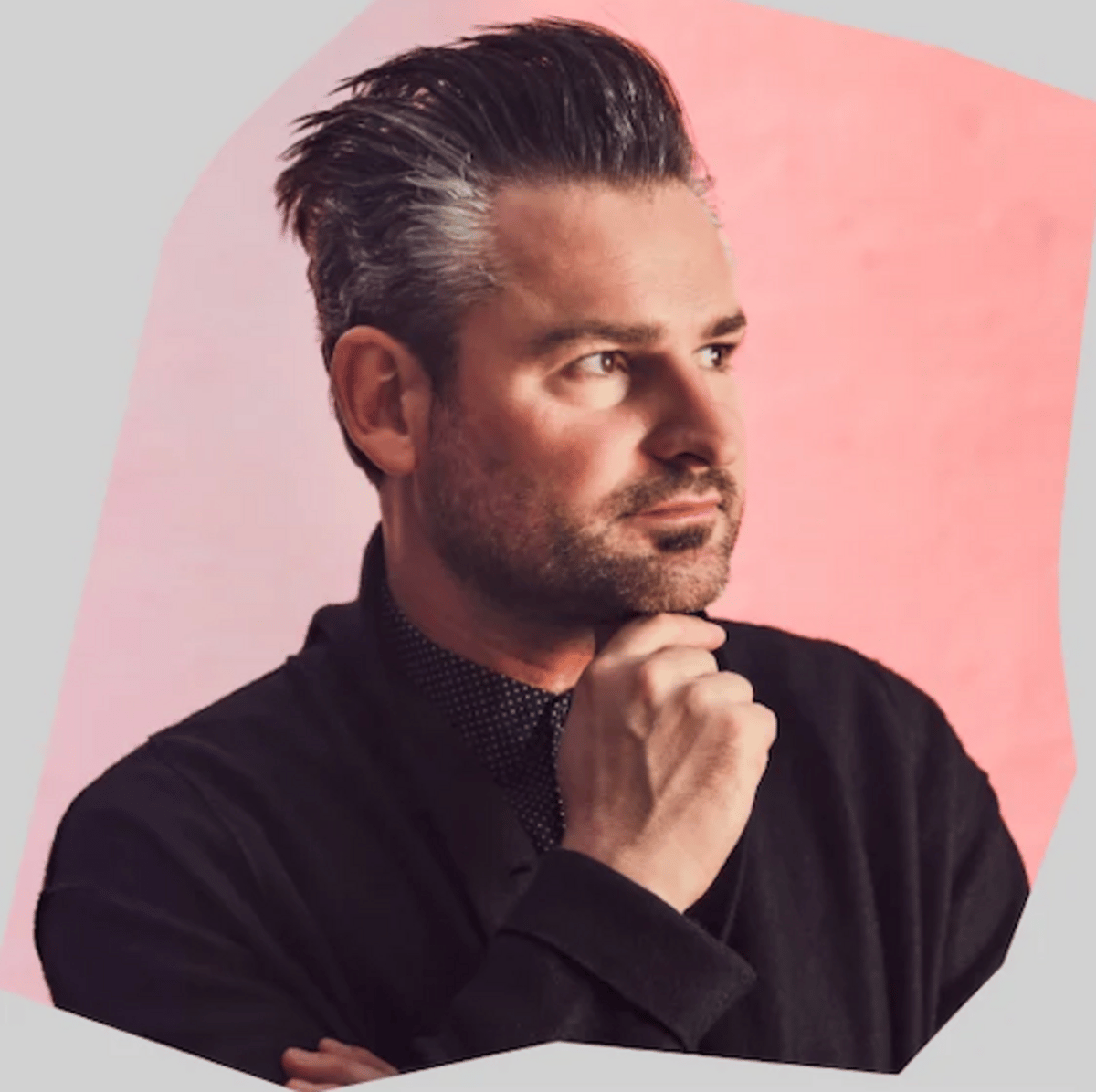

Some people don’t just design products. They design the way we see.
Most conversations about the future get louder the closer they get to technology.
Faster. Smarter. More efficient.
This one does the opposite.
When I sat down with Ivy Ross, something unexpected happened.
My shoulders dropped.
Ivy and I worked together in the early days of Google Glass, when nothing was certain and the questions were deeply human. I was focused on helping teams imagine experiences that would actually be useful in people’s lives. Ivy was shaping something even deeper: a design philosophy that honored intuition, beauty, and humanity inside a space dominated by speed and specs.


Time and again, she stepped into rooms full of engineers and dreamers and reminded us of something essential:
Design isn’t decoration.
It’s a responsibility.
I carried that lesson with me.
And I carried her book with me too.

On long drives between workshops, talks, and quiet stretches of highway, Your Brain on Art became a companion. Not a productivity book. Not a manifesto. A reminder that art changes us biologically. That beauty isn’t preference, it’s physiology. That when we ignore our senses, our nervous system pays the price.
Ivy doesn’t talk about art as inspiration.
She talks about it as infrastructure.
Infrastructure for our nervous system.
For empathy.
For our ability to imagine what comes next without hardening.
What stayed with me after this conversation wasn’t a concept.
It was a softening.
Art doesn’t convince us.
It calms us enough to feel again.
And that matters, especially now. Because feeling isn’t an escape from reality. It’s what allows us to meet reality without shutting down. Without becoming cold. Without losing our capacity for imagination.
At one point, I asked Ivy how she hopes to be remembered.
She didn’t say impact.
Or scale.
Or legacy.
She said: magic.
That felt right.
So here’s an invitation for this week.
Don’t overthink what’s next.
Put yourself in front of art.
Notice a color you usually pass by.
Make something with your hands without knowing why.
Not as a break from the future.
As preparation for it.
Because the future isn’t something we plan.
It’s something we feel our way into.
And art might be the most human technology we have.
If that sentence made you pause,
this conversation will stay with you.
A quiet, powerful exploration of art, neuroscience, leadership, and why the future will not be built by efficiency alone.
Some futures don’t shout.
They wait for us to slow down enough to notice.

New challenge starting February 1st
Better Sleep for a Better Future
11 Days of Future Ready Rest
Sleep shapes everything. How we think, how we feel, how we move through our days. And when rest is missing, even the most beautiful future can feel heavy. That’s why we’re doing this together, gently and without pressure. One small daily invitation at night with a voice message from Frederik to help your nervous system land the day and prepare for the night.
Join our WhatsApp group
Want more information first? Find all details here.
A note on where this comes from
NightShift is inspired by conversations on sleep, the nervous system, and future readiness, including Frederik’s podcast conversation with Els van der Helm, one of the world’s leading sleep experts, on The Future Is HOW.
Explore the podcast
With future love,
Frederik
